You watched the demos. You practiced on a mannequin. You may even have a certificate. And now a real client is on your calendar and your stomach drops.
If that sounds familiar, take a breath. Feeling unready after a first course is common, and it usually says more about how much a short course can cover than about your talent. Lash work is precise, it happens inches from someone's eyes, and confidence comes from repetition with someone checking your work.
Below: the five gaps most new artists run into, what Texas requires before you can charge for lash services, and a quick readiness check you can take right now.
Five Gaps a Short Course Often Leaves Behind
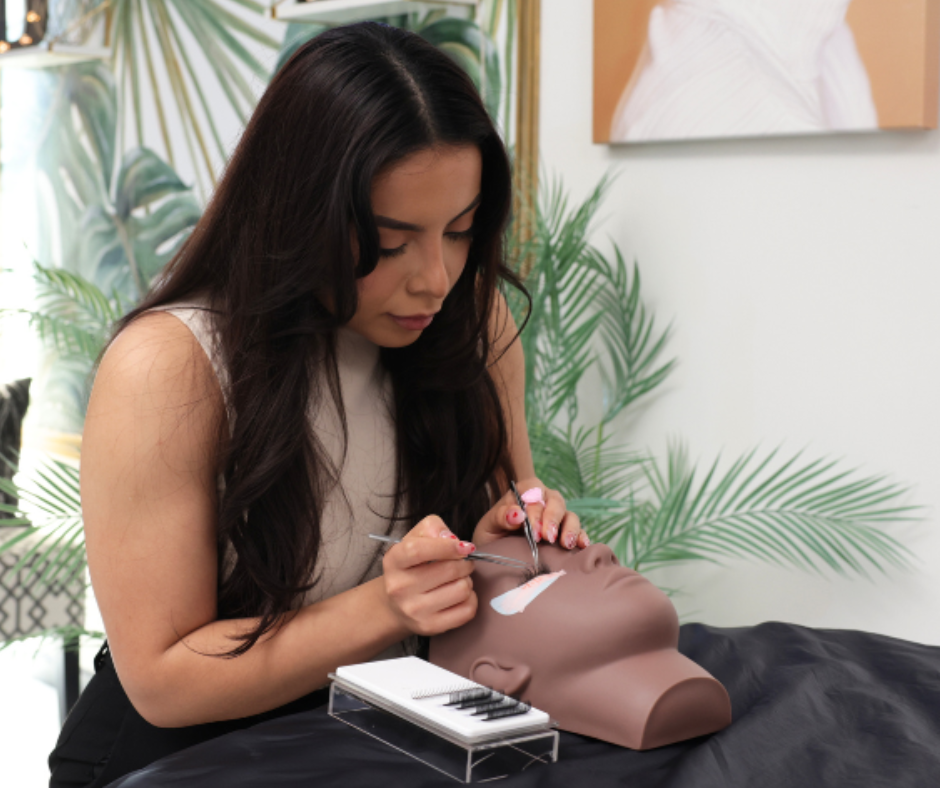
A mannequin never blinks, flinches, or has crossed, sparse, or uneven natural lashes. Live eyes are a different skill, and it takes many supervised appointments before your hands stop second-guessing.
Retention problems, stickies, poor isolation, and mapping that doesn't suit the eye shape are hard to spot yourself. A trained instructor sees the issue in seconds, and that is how improvement speeds up.
Adhesive behavior, curl and diameter choices, eye shapes, and knowing when a client shouldn't be lashed that day all matter. Without them you are copying steps without understanding why they work.
The rules are specific, and they apply from your very first paid client. See the section below for what Texas actually requires.
Pricing, booking, deposits, insurance, and finding your first clients decide whether a skill becomes an income. Many courses stop at technique.
What Texas Requires in Your Workspace
These come from TDLR's health and safety rule for eyelash extension services. They're easy to skip in a short class, and easy to get wrong under pressure:
Source: Texas Administrative Code, 16 TAC §83.115. Rules can change, so confirm the current text with TDLR.
In Texas, There's One More Piece: The License
This is what many new artists don't realize until after they've paid for a course. To legally perform lash services for pay in Texas, you need a TDLR Eyelash Extension Specialist license. Here is the path, step by step:
Complete 320 hours at a licensed school
Students at a licensed school receive a student permit during training. You must be at least 17 to apply.
Apply with TDLR and pay the $50 fee
The application fee is $50 and non-refundable. Applying online is the route TDLR encourages.
Pass the written and practical exams
Once TDLR confirms your eligibility, the testing vendor PSI emails you instructions for scheduling.
Clear the background check and get licensed
Your license is valid for two years from the date of issue. If you have any criminal convictions, TDLR requires an additional questionnaire with your application.
Source: TDLR, Eyelash Extension Specialist application page.
A short course, however good, doesn't replace those 320 hours. And working on paying clients without the license is serious: TDLR classifies unlicensed practice as a Class C violation, with penalties of $2,000 to $5,000 and/or up to revocation.
Short Course vs. Licensed Program
Short course (typical)
- Often a few days of demos
- Limited time with an instructor
- Technique-focused
- Does not on its own meet Texas's 320-hour requirement
Licensed program
- 320 hours at a TDLR-licensed school
- Structured practice with instructor feedback
- Prepares you for the written and practical exams
- Counts toward your Texas license
Short courses vary widely; the left column describes common patterns, not every course.
Are You Actually Ready? Check Yourself
Readiness isn't a feeling, it's a list. Tap each statement that is honestly true for you today.
Client-Ready Self-Check
Be honest. This is for you, not for anyone else.
If you can't tick most of these yet, that's information, not failure. It tells you exactly where to focus next.
"Confidence isn't something you wait for. It's what you earn through supervised repetition."
Your Options From Here
- Keep practicing with feedback. If you're already licensed, find a mentor or educator who reviews your work regularly. Practice without feedback repeats mistakes.
- Take a targeted refresher. If your gap is one skill, such as isolation or mapping, a focused refresher can fix it faster than starting over.
- Train through a licensed program. If you aren't licensed yet, this is the route Texas requires: the 320 hours, exam preparation, and structured practice with an instructor. See what's included at DLU.
What DFW Lash University Adds
DLU is a licensed lash school in Carrollton, Texas, offering the Eyelash Extension Specialist program toward Texas's 320-hour requirement, with 8- and 12-week flexible and hybrid formats. Beyond the hours, students get the following. For the full breakdown, see everything you get when you enroll at DFW Lash University.
- A curated Lanna Lashes student kit with classic and volume trays, adhesive, precision tweezers, and prep and removal products. It's included free with pay-in-full tuition, so ask admissions how it applies to your payment option
- 15% off Lanna Lashes products and courses for current students and alumni
- Free access to the Lanna Master Course for current students and alumni
- Besmi free for 4 months to start managing your business systems before your first booking
- Facial Scan free for 2 months as a consultation tool to use with clients
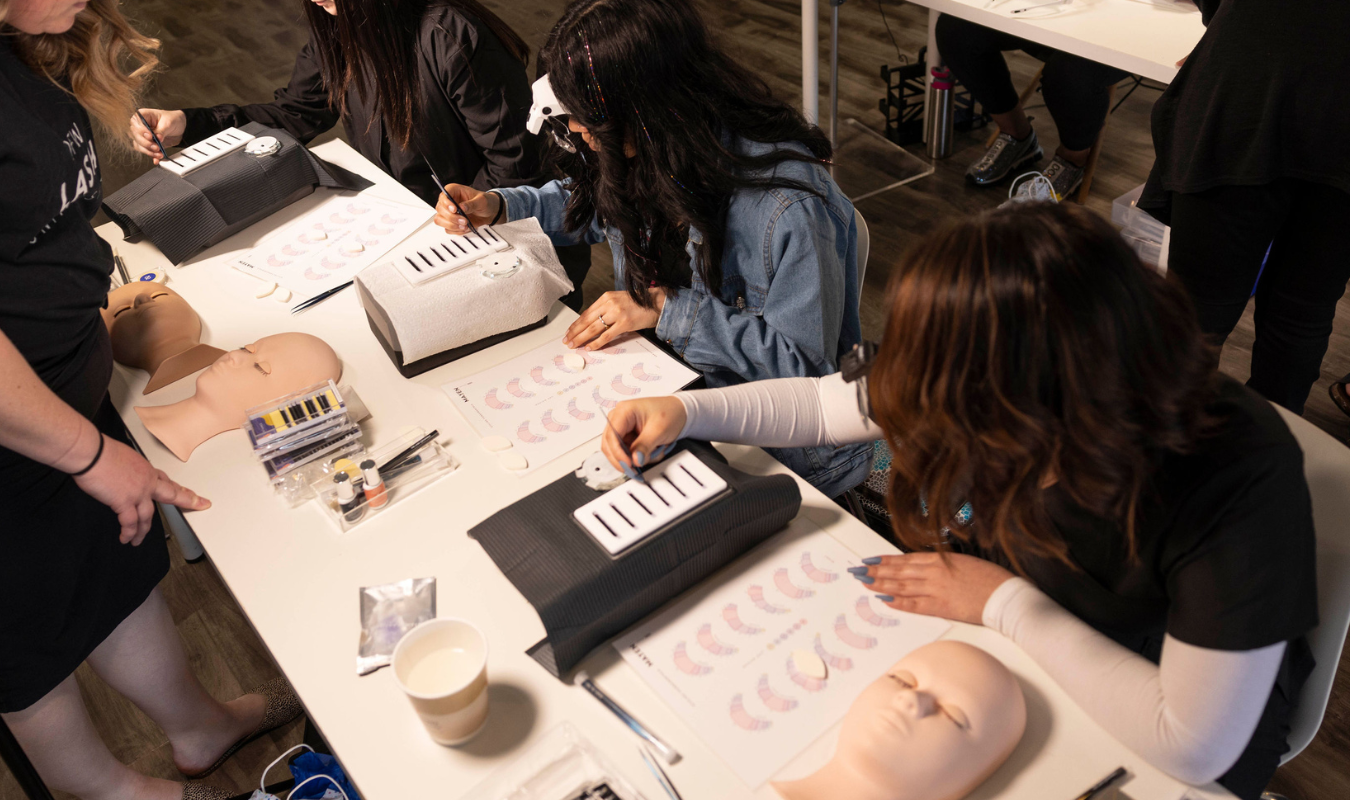
- Exam prep and student support including practical exam prep days and lash model days for hands-on practice
- An alumni community with 1,000+ licensed graduates

Frequently Asked Questions
Is it normal to feel unready after a lash course?
Yes. Short courses cover a lot of ground quickly, and confidence usually comes from repeated, supervised practice on real clients rather than from the course itself.
Can I work on clients in Texas after a short online or weekend course?
Not by itself. Texas requires a TDLR Eyelash Extension Specialist license: 320 hours of instruction at a licensed school, plus passing written and practical exams.
How much does the Texas license cost, and how long is it valid?
TDLR's application fee is $50 (non-refundable). The license is valid for two years from the date of issue. Applicants must be at least 17.
What happens if I work without a license?
TDLR lists unlicensed practice as a Class C violation, with penalties of $2,000 to $5,000 and/or up to revocation.
Will my previous course count toward the 320 hours?
TDLR requires the hours to be completed at a licensed school, so a short course taken elsewhere may not count toward them. Contact DLU admissions to ask how your previous training fits before you decide, and read what DLU's programs include in the meantime.
What should I do while I wait to feel ready?
Don't take paying clients until you hold your license. In the meantime, study the sanitation rules, practice mapping, work on your pricing and booking setup, and get feedback from an experienced educator whenever you can.