
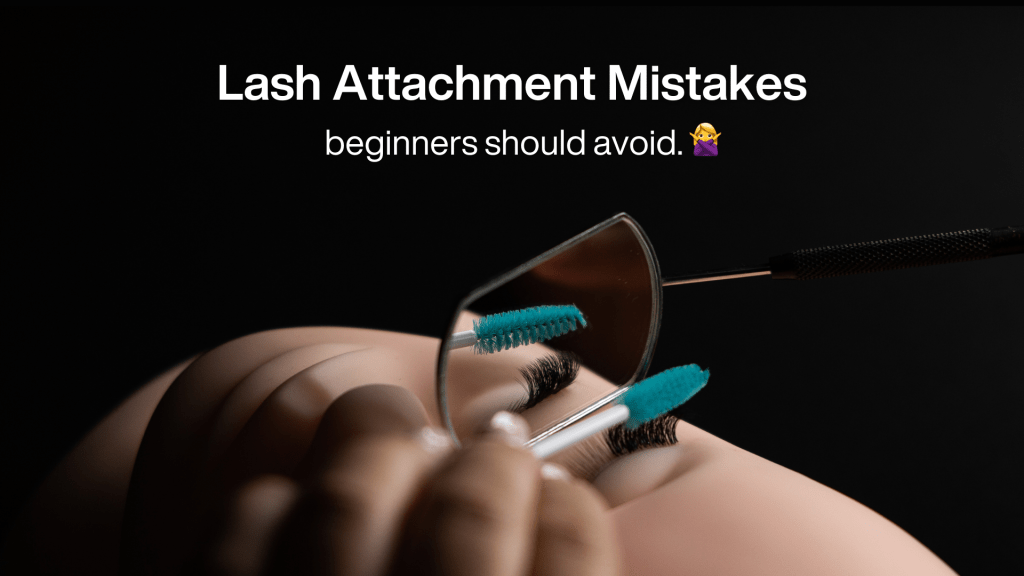
Lash Attachment Mistakes Beginners Should Avoid: Tips for Better Lash Retention
Struggling with lash retention as a beginner lash artist? You’re not alone—and the good news is, most retention issues stem from avoidable lash attachment mistakes.
In this blog, we’ll break down the most common lash attachment errors, explain why they impact retention, and provide expert tips to help you apply lashes that last. Whether you’re still in training or newly licensed, mastering proper lash attachment is key to building a loyal clientele and delivering stunning, long-lasting lash sets.
Why Proper Lash Attachment Matters
Your lash attachment technique directly affects lash retention, client satisfaction, and your reputation as a lash artist. Even if you’re using premium lashes and adhesive, poor attachment will lead to premature shedding, lifted bases, or lashes that twist and turn.

1. Avoid Lifted Bases
One of the most common mistakes beginner lash techs make is placing the extension too high or too far from the lash line. This creates a lifted base that not only looks messy but also affects how long the lashes stay on.
✅ Solution:
Isolate the natural lash completely before attaching.
Apply the extension snugly at the base, without touching the skin.
Ensure the base is secure and flush to prevent lifting.
💡 Lash retention tip: Proper isolation = better bonding = longer-lasting lashes!

2. Maximize Adhesive Contact
Are your lashes “floating” or barely attached? That’s a major red flag for poor retention. When the extension doesn’t make full contact with the natural lash, it won’t last long—especially as your client washes their face or sleeps.
✅ Solution:
Dip the extension correctly and attach it so that at least 2mm of the base makes solid contact with the natural lash.
Avoid using excess glue, which can weigh down the lash and lead to clumping.
3. Rushing Isolation
Isolation is the foundation of a clean and professional lash set. Skipping or rushing isolation causes stickies, poor attachment, and even lash damage.
🚫 Don’t:
Use one hand to apply lashes while skipping complete isolation with the other.
Rely on “guesswork” when isolating fine lashes.
✅ Do:
Use two hands: one for isolating, one for applying.
Invest in high-quality tweezers that make the process smoother.
4. Using Too Much Lash Glue
Using more glue doesn’t mean better retention—it often means messy lashes and potential irritation. The adhesive should bond the lash securely, not overwhelm it.
✅ Tip:
Use just enough adhesive to coat the base.
Dip for 1-2 seconds depending on your humidity and adhesive type.
Adjust glue amount based on lash diameter and style.
5. Not Anchoring the Lash Properly
When an extension is not anchored (or bonded) properly, it will shift, lean, or fall off prematurely.
✅ Fix it with:
Correct placement (top, bottom, or side depending on the lash direction).
A steady hand and deliberate movement during placement.
Pressure for 1-2 seconds to “lock” the lash into place.
Pro Tips for Better Lash Attachment
💎 Pro Tip 1: Work with precision. If you need to slow down, DO IT. Don’t sacrifice quality for speed—your goal is to master perfect attachment before speeding up.
💎 Pro Tip 2: Practice daily. Spend 1 to 2 hours practicing different types of attachment:
Top attachment for curly lashes
Side attachment for layered sets
Bottom attachment for stubborn straight lashes
Lash pickup and adhesive dipping technique
Final Thoughts
Mastering lash attachment takes time, patience, and daily practice. But the more consistent you are, the faster you’ll build confidence—and a client base that keeps coming back for lashes that last.

Ready to take the next step?
Let’s get you licensed and thriving!
Become a LICENSED lash artist in Texas or Connecticut!

Set yourself up for success and achieve your licensing goals with confidence!
Follow us on Instagram! @dfwlashuniversity